Why Rest Is Becoming the New Priority in Aviation
For decades, aviation has measured progress in speed. Faster departures, quicker transfers, tighter turnarounds. But as we move towards 2026, a quieter shift is taking place - one that prioritises not just how quickly we arrive, but how well.
Across private and business aviation, rest and recovery are entering the conversation in a meaningful way. Sleep is no longer a personal concern to be managed after landing; it’s becoming an integral part of the travel experience itself.
This shift reflects a broader cultural change. High-performance no longer means pushing harder at all costs. It means protecting energy, supporting cognitive function, and arriving ready - not depleted. Aviation, long associated with disruption to routine and rest, is beginning to respond.
From Speed to State of Mind
The traditional value proposition of aviation has been clear: get there faster. But in an always-on world - one defined by long working hours, constant connectivity and mounting burnout - speed alone is no longer enough.
Founders, executives and creatives are asking different questions of travel:
How will this journey affect my sleep?
Will I arrive clear-headed or exhausted?
How long will it take to feel like myself again?
These are not abstract concerns. Sleep underpins everything from decision-making and mood to immunity and long-term health. As wellness becomes a strategic priority rather than a lifestyle add-on, travel is being reassessed through a new lens.
Sleep Enters the Aviation Conversation
One of the clearest signals of this shift came recently from VistaJet, which launched a science-backed sleep programme designed to support rest not just during flight, but before and after travel.
Rather than focusing on aesthetics or indulgence, the programme centres on:
Circadian rhythm alignment
Cabin lighting and timing
Nutrition and hydration
Restorative routines at destination
The significance here isn’t the programme itself - it’s what it represents. Sleep has moved from being an incidental benefit of private travel to something actively designed for.
Crucially, VistaJet is not alone.
A Broader Industry Shift
While not always framed explicitly as ‘sleep programmes’, many operators have been quietly optimising for rest for years.
NetJets, for example, has long emphasised consistency across its fleet. Familiar cabin layouts, predictable aircraft types and reliable onboard environments all reduce cognitive load - an often-overlooked factor in travel fatigue. When the environment is predictable, the body relaxes more easily.
Charter brokers such as Air Charter Service increasingly discuss aircraft choice in terms of overnight comfort, cabin quietness and suitability for rest - particularly for travellers arriving directly into meetings, events or demanding schedules.
Even at smaller, more bespoke levels of aviation, there is a growing emphasis on:
Flight timings that support natural sleep cycles
Reduced ground delays
Simpler, calmer arrival experiences
Together, these changes point to a clear conclusion: sleep is becoming a decision-making factor in aviation.
Sleep Is an End-to-End Experience
What’s often missed in discussions about rest at altitude is that sleep doesn’t start once you’re airborne.
It begins much earlier - with how you travel to the airport, how long you wait, how chaotic the environment feels, and how smoothly the transition from ground to air takes place.
Large, congested hubs are designed for scale, not serenity. Bright lights, queues, noise and unpredictability all place the nervous system on high alert. Even before boarding, the body is primed for stress rather than rest.
By contrast, smaller, well-run regional airports like ourselves here at Leeds East Airport, offer something increasingly rare: calm.
Less congestion. Fewer delays. Shorter distances. More predictable flows. These factors may seem operational, but their impact is physiological. A calmer environment supports better sleep - not just during the journey, but long after arrival.
Why Calm Is Becoming the New Luxury
Luxury in aviation has changed. It’s no longer defined by excess or spectacle, but by ease.
The most valued experiences today are:
Quiet arrivals
Minimal friction
Privacy and discretion
A sense of control over time and energy
In this context, sleep is not a separate wellness concern - it’s the ultimate marker of a successful journey. If you arrive rested, the journey has done its job.
This reframing also challenges long-held assumptions about what makes travel ‘premium’. Increasingly, it’s not about scale or grandeur, but about thoughtful design and operational intelligence.
Looking Ahead to 2026
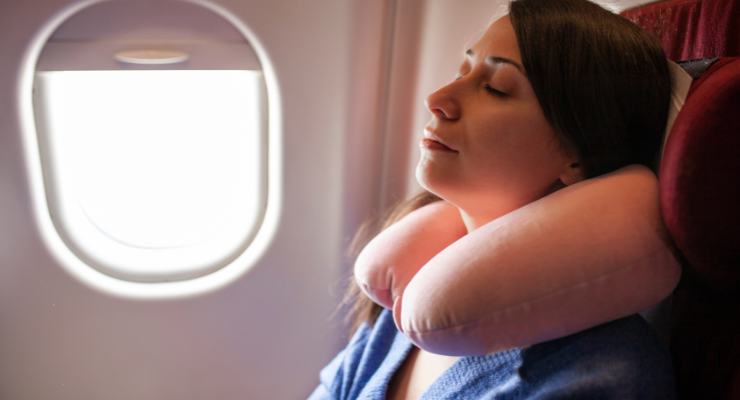
As we move into 2026, sleep is set to become a central pillar of wellbeing - alongside movement, nutrition and mental health. Travel will be part of that conversation, whether by design or by default.
Aviation providers that understand this shift - that recognise rest as part of performance - will be better positioned to serve the next generation of travellers.
Because the future of aviation isn’t just about moving people efficiently. It’s about helping them arrive well.